
Show summary Hide summary
Utah’s unbeaten start under new head coach Morgan Scalley has drawn national attention — and arrived as the university rolls out a first-of-its-kind private-equity arrangement tied to its athletics operation. The timing has made Salt Lake City a focal point for both on-field results and off-field finance as the Utes prepare to host Houston and College GameDay this weekend.
On the field and in the spotlight
The Utes enter the weekend 6–0 under **Morgan Scalley**, ranked No. 10 and set to face No. 14 Houston on Saturday night. ESPN’s College GameDay will broadcast from Salt Lake City Saturday morning after last weekend’s episode — staged at BYU less than 50 miles away — became the show’s most-watched of the season with about 3 million viewers.
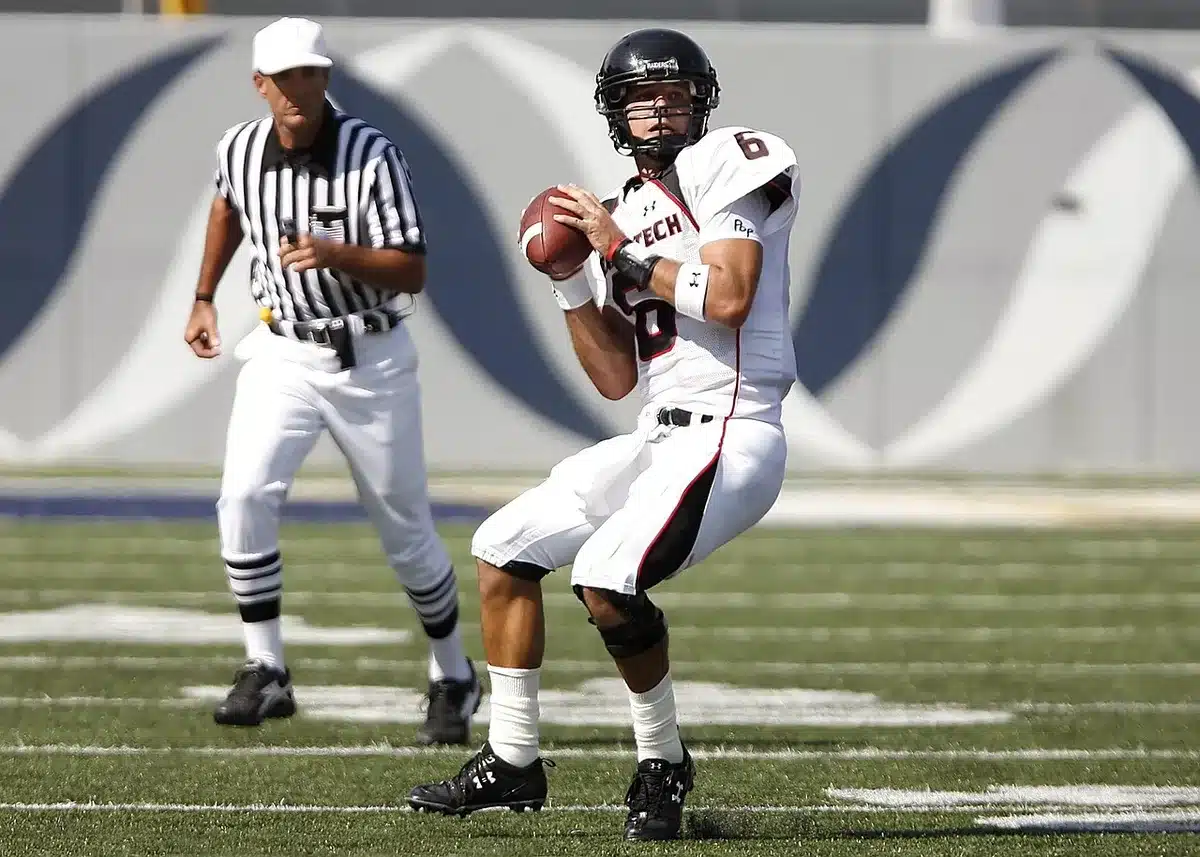
Nearby BYU vaulted to No. 2 in the AP Top 25 after its upset of Notre Dame, intensifying local interest. If both Utah and BYU remain unbeaten when they meet on Nov. 7, that game could become the biggest chapter yet in the in-state rivalry.
Kirk Goldsberry spearheads Texas AI effort and acknowledges skeptics’ concerns
Former Wisconsin quarterbacks’ results at new schools
A pioneering private-equity experiment
Utah recently established a for-profit entity called Crimson Brand Partners (CBP) and sold a stake to private-equity fund Otro Capital. The university spun off certain assets into CBP, which now oversees commercial activities across the athletic department and parts of the university. The venture’s full terms have not been disclosed, but it is expected to produce revenue in the nine-figure range.

Scalley signed a five-year, $27 million contract around the same time the deal was announced. University leaders say the agreement will support upgrades and new revenue streams without laying out exact financial mechanics publicly.
CBP is led by CEO Matt Webb, a longtime sports executive who previously held corporate roles with the Saints and Pelicans. The entity is financing a recently approved $40 million renovation of Rice-Eccles Stadium, according to university approvals granted earlier this month.
How CBP operates and what it controls
CBP now manages a wide range of commercial functions, including merchandising, licensing, sponsorships, ticketing, digital media and non-sporting events at university venues. Utah athletic director Mark Harlan, who serves as chair of CBP, framed the initiative as a long-term project.
“This is a multiple-year journey,” Harlan said at a Wednesday press conference. He described the CBP team as largely drawn from professional sports: “This group is primarily all from the NFL, NBA, and MLB. They’re up to 70 people. … Quantity is important but quality, too. So, we’re starting to see a lot of lift on that, certainly some of the deals they’ve done have been great.”
Harlan also emphasized experimentation across sports. “We’re trying stuff at football, we’ll start seeing that in basketball,” he said. “Some stuff’s working, some stuff doesn’t work. That’s what you do.”
Like many Power Four programs, Utah is distributing the maximum allowed under the House v. NCAA settlement for revenue sharing — nearly $22 million this year. How much extra compensation top players receive through separate NIL arrangements remains unclear from public records.
Debate and a broader industry picture
Not everyone supports selling equity in collegiate athletics. Utah alumnus and former NBA executive Dave Checketts criticized the approach in May, arguing it can amount to “sell[ing] off their future.” He said: “It’s one thing to do what the University of Utah has done—kind of sell off their sports program because they want a better stadium and they want a basketball building, and they want it right now. So they kind of sold off their future.”
Outside Utah, private equity has not become widespread in college sports. The Big 12 this year announced a partnership with RedBird Capital Partners and Weatherford Capital that offers member schools an option to access a line of credit up to $30 million; so far, no conference school has accepted the credit. The Big Ten explored a potential deal with UC Investments last year but negotiations fell apart. The American Athletic Conference has said it is open to considering private-equity arrangements.
Editors’ note: RedBird IMI, in which RedBird Capital Partners is a joint venture partner, is the primary investor in Front Office Sports.