

Show summary Hide summary
President Trump’s movements at college football games have become the center of a new dispute after Texas coach Steve Sarkisian suggested the president’s departure from the 2026 College Football Playoff title affected in-game communications. The White House pushed back, saying the president’s exit did not cause headset problems that could have influenced the outcome between Indiana and Miami.
White House pushes back
The administration’s denial arrived on social platform X, where the Trump campaign’s Rapid Response 47 account wrote that the president’s departure from the CFP championship in January “did not cause headset or comms issues for the teams.” The post quoted and replied to an Axios reporter who had compared the game’s play-by-play with a White House pool report tracking the president’s movements.
The statement sought to undercut two linked assertions: first, that helmet communications were disabled at a critical moment during Miami’s final drive; and second, that any such disruption resulted from Secret Service protocols triggered by the president’s movement.
NCAA files suit contesting Ohio governor’s order on fifth-year eligibility
Wisconsin’s homecoming matchup with Michigan State: three predictions
Coaches and sources offer different timelines
Sarkisian raised the matter publicly while previewing Texas’s matchup with Tennessee, a game the president is expected to attend. He said headset links between coaches — and between coaches and players — are sometimes cut when the president enters or exits a venue and that teams must plan for that possibility.
“They cut headsets to coaches, they cut headsets to coach-to-player communications,” Sarkisian told the Longhorn Network. “So you have to plan for that if, and/or when, and you get no warning.” He also relayed what he said was a conversation with Miami coach Mario Cristobal, claiming that Miami had been without communications during a late drive in the national title game when the president was leaving early.
That version of events, however, has been contested. Two Miami sources told CBS Sports that while communications did briefly drop in the game, it did not happen during Miami’s final drive and did not affect play. Indiana coach Curt Cignetti gave an on-the-record account saying headsets went down for “two to three plays” around the seven-minute mark of the fourth quarter. He added that comms returned after Miami’s final touchdown and that his team “had no problem the rest of the game.”
Miami’s program did not immediately respond to requests for comment, and the Secret Service did not reply to an emailed request seeking clarification on whether security protocols can interrupt sideline radio traffic.
Pool report timeline
Contemporaneous pool reporting appears to align more closely with Cignetti’s timeline than with the claim that communications failed during the final drive. The pool noted the president left Hard Rock Stadium at 10:47 p.m., with just under eight minutes remaining in the fourth quarter, and was seen briefly in the presidential limousine. The pool reported he arrived at North Perry Airport at 10:54 p.m.

Game records show regulation play concluded around 11:17 p.m. Miami’s last sustained possession began with 1:42 left on the clock and ended with a Carson Beck interception about 44 seconds before time expired. Taken together, the timing suggests the president had likely departed well before Miami’s final drive concluded.
Why helmet communications matter
Coach-to-coach headsets have been standard for years, but direct coach-to-player links are a more recent change. Approved for use prior to the 2024 season, the system allows a single offensive and a single defensive player to receive sideline instructions until the play clock reaches 15 seconds, at which point transmissions are cut.
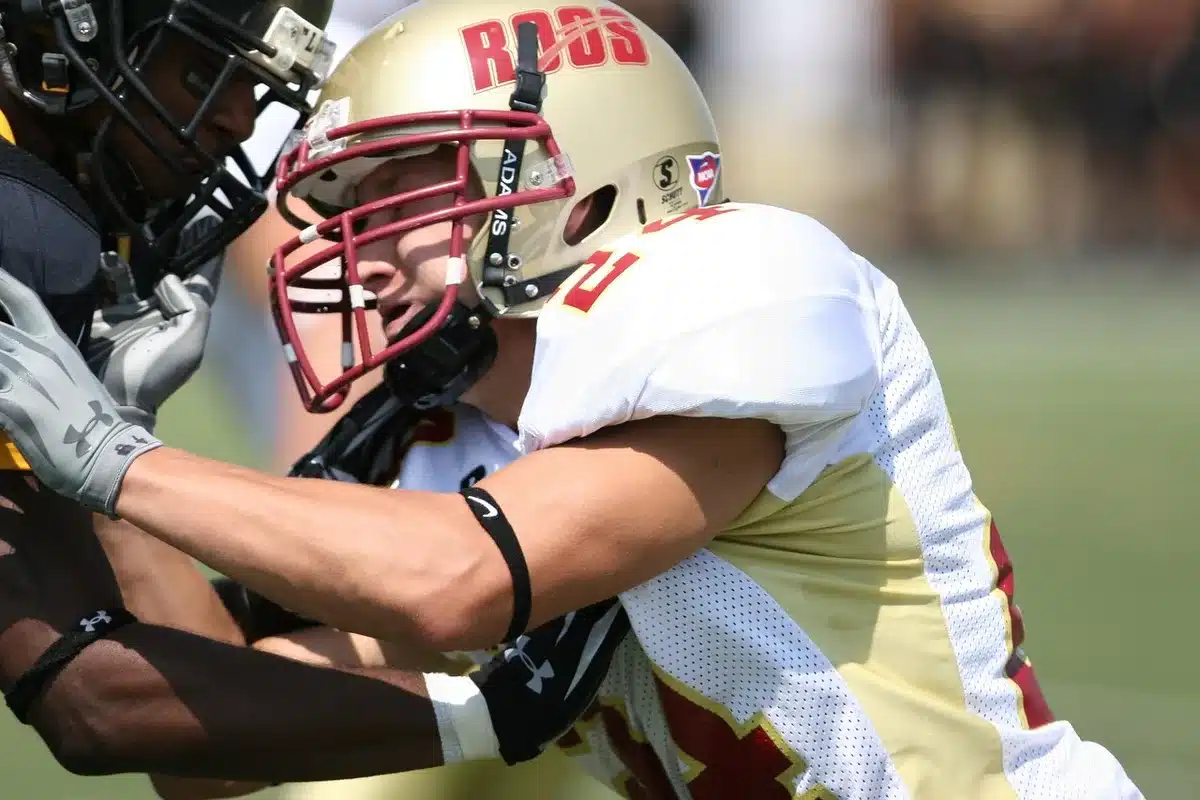
On-field recipients typically include quarterbacks and inside linebackers. These players are marked with a green sticker on the back of their helmets — commonly called the green dot — so officials and coaches can identify who is authorized to receive signals.
When electronic communication fails, teams revert to older methods: hand signals, sideline signs and prearranged signals remain standard backups. Coaches say preparation for sudden radio outages is part of game planning.
Implications for this weekend’s game
Sarkisian warned coaches and staffs to expect possible interruptions when a high-profile visitor moves through a stadium. He noted his own experience dating to 2019, when he was on the staff at Alabama and President Trump attended an LSU-Alabama matchup. Opposing Texas coach Josh Heupel does not have prior experience coaching in a game attended by the president, according to the reporting.
The dispute over the January championship underscores both the practical and political sensitivity of presidential security at sporting events. Whether any competitive advantage resulted from that night’s brief communications lapses remains contested by coaches, team sources and the White House.








