Show summary Hide summary
Wisconsin opened the 2026 season at Lambeau Field against No. 4 Notre Dame and fell 41-13, a result that mirrored their 2021 meeting. Despite the one-sided final score, several units showed promise — notably the wide receivers and parts of special teams — while other areas exposed clear work to do.
Quarterback
Making his Badger debut, Colton Joseph mixed physicality with uneven decision-making. The Old Dominion transfer completed 19 of 30 passes for 217 yards and threw a 28-yard touchdown to Malachi Coleman that briefly tied the game in the second quarter.
NCAA files suit contesting Ohio governor’s order on fifth-year eligibility
Wisconsin’s homecoming matchup with Michigan State: three predictions
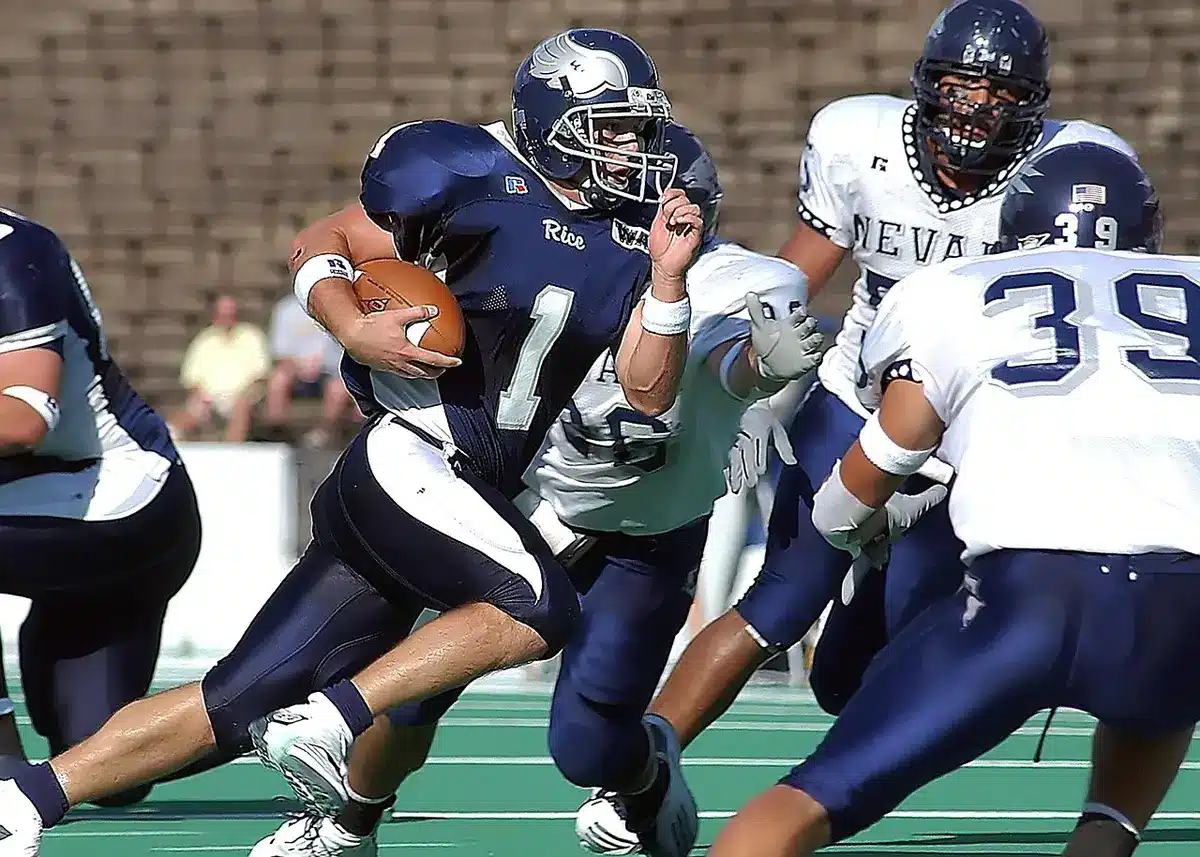
Joseph’s afternoon included a costly turnover: a pick-six early in the second half when a pass intended for Chris Brooks Jr. was intercepted by cornerback DJ McKinney. He showed his athleticism but was held in check as a runner, finishing with 12 carries for 3 yards (the box also notes 10 carries for 15 yards excluding sacks). Importantly, he left the game healthy.
With two nonconference games — Western Illinois and Eastern Michigan — before Big Ten play begins at Penn State, Joseph will have time to build rhythm and confidence.
Grade: C
Running Backs
Wisconsin’s traditional ground identity did not materialize at Lambeau. Senior transfer Abu Sama III carried the load with 15 rushes for 49 yards (a long of seven), while Darrion Dupree had four carries for 15 yards (long of eight).
Sama flashed speed on the perimeter at times, but Notre Dame’s front and the Badgers’ offensive-line performance limited sustained success. Given the contextual factors outside the backs’ control, Sama still projects as a focal point moving forward, but the opener’s output was underwhelming.
Grade: C-
Wide Receivers
The receiving corps was a clear bright spot. Senior transfer Malachi Coleman led the group with four catches for 76 yards, including that 28-yard score. Tyrell Henry (4 for 42) and Chris Brooks Jr. (3 for 38) also contributed, and Eugene Hilton Jr. managed three receptions for 31 yards on just 17 snaps while appearing to play through a lower-body issue.
Coleman, a 6-foot-5 former recruit, posted his best receiving line to date, and getting Hilton healthy and more involved could further boost the passing attack.
Grade: B
Tight Ends
Tight end usage was modest. Grant Stec led the group in snaps (42) and finished with three catches for 20 yards. Jacob Harris (17 snaps) caught one pass for three yards; Emmett Bork and Ryan Schwendeman saw limited snaps as well.
Stec looks like the early front-runner at the position as both a blocker and pass catcher, but the unit provided minimal impact overall.
Grade: C
Offensive Line
The line faced a stiff test from Notre Dame’s front and lost starting right guard Emerson Mandell to a foot injury, thrusting backups into extended duty. Arkansas transfer Blake Cherry and Augustana transfer Stylz Blackmon struggled in pass protection without Mandell available.

Right tackle Kevin Heywood, making his first career start and his first action since 2023, looked rusty, and left tackle PJ Wilkins didn’t fare much better. Center Austin Kawecki and left guard Colin Cubberly had steadier outings, but the unit averaged just 2.2 yards per carry and allowed consistent pressure. Wisconsin gave up only two sacks, a total helped by Joseph’s mobility and quick releases, but run blocking and pass protection need improvement.
Grade: D+
Defensive Line
Wisconsin’s front delivered an excellent start. Edge rusher Sebastian Cheeks ripped the ball loose on a strip-sack of CJ Carr on the opening series, and a six-man interior rotation limited Notre Dame to 1.8 yards per carry in the first half.
The second half told a different story: the Badgers failed to generate another sack or consistent pressure, and Notre Dame’s run game found traction. Still, holding the Fighting Irish to 3.5 yards per carry for the game overall and Cheeks’ early impact were encouraging signs.
Grade: B-
Linebackers
This group produced both standout plays and costly errors. Mason Posa finished with a game-high 15 tackles but was flagged for unnecessary roughness in the second quarter, a call that converted a third-and-long into first-and-goal and led to a Notre Dame touchdown.
Cooper Catalano was generally serviceable despite a couple of missed tackles, while newcomer Jon Jon Kamara struggled in limited time, getting lost in coverage and missing a tackle on Nolan James Jr.’s fourth-quarter score. The linebackers helped stifle the run early but must clean up mistakes given high expectations for the unit.
Grade: C+
Defensive Backs
The cornerbacks were mostly solid in coverage. Redshirt senior Javan Robinson was steady, and Bryce West recorded two pass breakups in the second quarter. The safeties, however, failed to make a consistent impact; Matt Jung was largely ineffective and Marvin Burks Jr. contributed minimally and may not be fully recovered from an injury late in camp.
CJ Carr warmed up in the second half, completing 10 of 13 passes for 133 yards and a touchdown, a stretch the analysis partly attributes to an abundance of soft zone calls from defensive coordinator Mike Tressel. The secondary showed potential, but assignments and tackling require attention.
Grade: C+
Special Teams
Special teams swung wildly between game-changing plays and critical miscues. Liam Danitz got his hand on a punt early, and kicker Gavin Lahm made field goals from 27 and 36 yards. Punter Sean West boomed a 70-yard punt that pinned Notre Dame inside the one-yard line.
Conversely, a muffed kickoff by Harrison Bortolotti late in the first quarter gave Notre Dame the football and quickly produced a touchdown; Bortolotti was removed from kickoff duty after the error. Those extremes make this phase difficult to grade but also suggest real upside if mistakes can be corrected.